Modular Sofa Buying Mistakes (And How to Avoid Them Before You Buy)

Modular sofas have become one of the most popular furniture choices for modern homes, and for good reason. They offer flexibility, customizable layouts, and the ability to adapt as your family or living space changes. Whether you're furnishing your first apartment or upgrading your forever home, a modular sofa can be one of the smartest furniture investments you'll make.
But despite their versatility, buying a modular sofa isn't always as straightforward as it seems.
Many buyers focus on color or price first, only to realize later that the sofa doesn't fit their room, isn't comfortable for their lifestyle, or requires more maintenance than expected. These aren't product defects—they're often buying mistakes that could have been avoided with better planning.
The good news is that most of these issues are entirely preventable.
In this guide, we'll walk through the most common modular sofa buying mistakes, explain why they happen, and show you how to avoid them so you can choose a sofa you'll enjoy for years.
Quick Checklist Before You Buy
Before ordering a modular sofa, ask yourself these questions:
✅ Have I measured my room accurately?
✅ Will the sofa fit through my doors and hallways?
✅ Is the seat depth comfortable for my height?
✅ Does the fabric match my lifestyle?
✅ Do I need machine-washable covers?
✅ Will my family or pets use the sofa every day?
✅ Can the sofa grow with my future needs?
✅ Have I considered long-term maintenance?
If you answered "no" to any of these, keep reading.
Why Buyers Make Mistakes When Choosing a Modular Sofa
Unlike traditional couches, modular sofas offer countless configurations, fabrics, and sizes.
While that flexibility is one of their greatest strengths, it also gives buyers more decisions to make.
Instead of choosing one sofa, you're choosing a seating system that may remain in your home for the next decade.
Taking a little extra time before purchasing often leads to a much better ownership experience.
Mistake #1: Buying Without Measuring Your Room
This is easily the most common mistake.
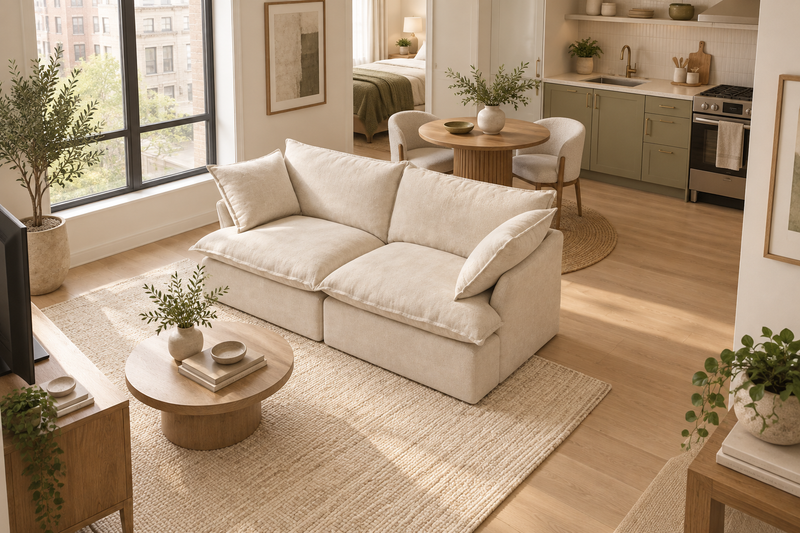
Many people assume that because a sofa is modular, it will automatically fit their living room.
Unfortunately, that's not always true.
Modules may individually fit through the door, but the completed configuration can still overwhelm the space.
How to Avoid It
-
Measure the entire room, not just the empty wall.
Think about coffee tables, side tables, rugs, fireplaces, windows, and walkways that affect how the sofa will fit.
-
Leave room to move comfortably.
A beautiful sectional quickly feels oversized if it blocks natural traffic flow through the room.
-
Use painter's tape on the floor.
Outlining the sofa's footprint gives you a realistic sense of how much space it will occupy before you buy.
-
Think beyond today's layout.
If you're planning to move or renovate in the near future, consider a configuration that can easily adapt.
Mistake #2: Ignoring Seat Depth
Many buyers compare overall sofa length but completely overlook seat depth.
This measurement has a much bigger impact on comfort than many people realize.
Why It Matters
Seat depth determines how supported your legs feel while sitting.
A seat that's too shallow may feel cramped, while one that's too deep may be uncomfortable for shorter users.
What to Consider
-
Tall individuals often prefer deeper seating.
Longer legs benefit from additional thigh support and more room to stretch out comfortably.
-
Shorter users may prefer a more moderate depth.
Being able to sit back while keeping your feet comfortably on the floor improves overall ergonomics.
-
Think about how you actually use your sofa.
If you spend evenings lounging, reading, or watching movies, a deeper seat often creates a more relaxed experience.
-
Test different seat depths whenever possible.
Comfort is highly personal, and even small differences can noticeably affect long-term satisfaction.
Mistake #3: Choosing the Wrong Fabric
Fabric affects far more than appearance.
It influences durability, maintenance, comfort, and how well the sofa fits your lifestyle.
Many buyers fall in love with a fabric swatch without considering how it will perform in everyday life.
How to Choose the Right Fabric
-
Consider your household first.
Homes with children or pets often benefit from durable performance fabrics that are easier to clean.
-
Think about maintenance.
If you don't want to schedule professional upholstery cleaning, removable washable covers can make ownership much easier.
-
Balance softness with practicality.
The softest fabric isn't always the easiest to maintain over several years.
-
Look for tightly woven upholstery.
Durable fabrics generally resist everyday wear better than delicate materials.
Mistake #4: Buying for Today's Needs Only
A modular sofa is designed to evolve with your home.
Many buyers forget to think beyond their current living situation.
Plan for the Future
Ask yourself:
- Will you move within the next few years?
- Are you planning to grow your family?
- Do you regularly host overnight guests?
- Could your living room layout change?
Buying a modular system that allows future expansion often provides better long-term value than purchasing a fixed configuration that may no longer suit your needs.
Mistake #5: Prioritizing Looks Over Comfort
Beautiful photography can make almost any sofa look inviting.
However, appearance alone doesn't guarantee everyday comfort.
A sofa is one of the most frequently used pieces of furniture in your home.
Choosing a model based solely on aesthetics may lead to disappointment after months of daily use.
Focus on Long-Term Comfort
Look for:
- Supportive cushions
- Comfortable seat depth
- Quality back support
- Spacious seating
- Durable construction
Comfort should remain the priority after the excitement of unboxing wears off.
Mistake #6: Forgetting About Daily Maintenance
It's easy to focus on how a sofa looks on delivery day, but ownership extends far beyond the first impression.
Over the years, your sofa will collect dust, crumbs, pet hair, spills, and everyday wear. If routine maintenance feels difficult, you're less likely to keep it looking its best.
That's why maintenance should be one of your buying criteria—not an afterthought.
How to Avoid It
-
Choose removable covers whenever possible.
Being able to remove and wash slipcovers makes routine cleaning significantly easier than relying solely on spot cleaning.
-
Think about your cleaning habits.
If you're unlikely to schedule professional upholstery cleaning, look for fabrics that are designed for easy at-home maintenance.
-
Consider your lifestyle.
Families with children, pet owners, and frequent entertainers usually benefit from sofas that are built with easy care in mind.
-
Read the care instructions before buying.
Not all performance fabrics have the same cleaning requirements. Understanding the recommended care routine helps set realistic expectations.
-
Plan for long-term ownership.
A sofa that's easy to maintain is more likely to continue looking great after several years of daily use.
Mistake #7: Choosing the Wrong Configuration
One of the biggest advantages of modular furniture is flexibility.
Ironically, many buyers limit that flexibility by choosing the wrong starting configuration.
Some people purchase the largest layout available because it looks impressive online, while others choose a configuration that's too small and quickly outgrow it.
How to Avoid It
-
Start with how you actually live.
Consider how many people use the sofa every day rather than how many people you entertain once or twice a year.
-
Think about traffic flow.
Leave comfortable walking paths around the sofa instead of filling every available inch of the room.
-
Visualize multiple layouts.
Modular sofas can often be rearranged, so imagine how different configurations might work if your needs change.
-
Balance seating and open space.
A slightly smaller configuration often creates a room that feels larger and more inviting.
-
Leave room for future expansion.
If your modular system allows additional pieces later, you don't necessarily need to purchase every module upfront.
Mistake #8: Ignoring Your Lifestyle
The "best" modular sofa isn't the same for everyone.
A sofa that's perfect for a retired couple may not be ideal for a household with young children, multiple pets, or someone who works from home every day.
Your daily routine should influence almost every buying decision.
Questions to Ask Yourself
-
Do you have pets?
Look for tightly woven performance fabrics that are easier to maintain and clean.
-
Do you have young children?
Washable covers and durable upholstery can make everyday messes much less stressful.
-
Do you work from home?
Supportive cushions become increasingly important if you spend several hours sitting on the sofa each day.
-
Do you entertain frequently?
Larger modular configurations may provide more flexible seating for guests.
-
Do you move often?
Individual modules are generally easier to transport than traditional one-piece sectionals.
Choosing a sofa that matches your lifestyle usually leads to greater satisfaction than simply choosing the one with the most attractive appearance.
Mistake #9: Not Thinking About Long-Term Value
Many buyers compare price tags without considering the overall cost of ownership.
A modular sofa is a long-term investment, and its value depends on much more than the initial purchase price.
Factors such as durability, maintenance, adaptability, and comfort all contribute to whether a sofa continues delivering value over many years.
Focus on Value, Not Just Price
-
Durable construction often pays off.
A well-built sofa may cost more initially but can remain comfortable and attractive for much longer.
-
Washable covers reduce maintenance expenses.
Easy cleaning may decrease the need for professional upholstery services throughout the sofa's lifespan.
-
Expandable designs protect your investment.
Adding modules later is often more economical than replacing an entire sectional after moving.
-
Timeless styling lasts longer.
Neutral, versatile designs are less likely to feel outdated as interior trends evolve.
-
Comfort matters every day.
A sofa you genuinely enjoy using offers better long-term value than one chosen primarily because it was on sale.
Mistake #10: Skipping Reviews and Real-World Photos
Professional product photography showcases a sofa under ideal conditions.
While these images are useful, they don't always reflect how the sofa looks inside everyday homes.
Real customer reviews and user-generated content often provide valuable insights into long-term ownership.
What to Look For
-
Photos in real homes.
Customer images offer a more realistic understanding of scale, color, and proportions than professionally staged marketing photos.
-
Long-term ownership feedback.
Reviews written after several months or years often reveal more about durability than first impressions.
-
Comments about comfort.
Pay attention to how owners describe the sofa after daily use rather than immediately after delivery.
-
Maintenance experiences.
Reviews discussing cleaning, washable covers, or pet ownership can help set realistic expectations.
-
Consistent themes.
One isolated complaint isn't necessarily meaningful, but repeated feedback across many reviews deserves attention.
Modular Sofa vs Traditional Sectional: Common Buying Mistakes
Many of the mistakes above apply to all sofas, but modular furniture introduces a few unique considerations.
|
Buying Consideration |
Modular Sofa |
Traditional Sectional |
|
Measuring the room |
Important |
Important |
|
Planning future layouts |
Very Important |
Less Important |
|
Expansion potential |
Excellent |
Limited |
|
Moving to a new home |
Easier |
More difficult |
|
Washable cover options |
Common |
Less common |
|
Long-term flexibility |
Excellent |
Limited |
For buyers expecting their living situation to change over time, modular sofas often provide greater adaptability and long-term value.
Modular Sofa Buying Checklist
Before placing your order, review this checklist to make sure you've considered the most important factors.
Room Planning
- Measure the entire room.
- Check doorways and hallways.
- Leave comfortable walking paths.
- Consider windows and radiators.
- Visualize the sofa's footprint.
Comfort
- Compare seat depth.
- Evaluate cushion support.
- Consider back height.
- Think about your preferred sitting position.
- Match the sofa to your height.
Lifestyle
- Consider children and pets.
- Think about entertaining guests.
- Evaluate your cleaning routine.
- Decide whether washable covers are important.
- Consider future moves or renovations.
Long-Term Ownership
- Compare warranties.
- Research replacement parts or additional modules.
- Read long-term customer reviews.
- Choose a timeless design.
- Think beyond today's needs.
Signs You're Choosing the Right Modular Sofa
A good modular sofa should continue fitting your lifestyle years after you bring it home.
You'll likely be making the right decision if the sofa:
- Fits comfortably without overwhelming the room.
- Supports your preferred sitting position.
- Matches your daily routine.
- Is easy to maintain.
- Can adapt to future life changes.
- Uses durable, high-quality materials.
- Feels comfortable after extended sitting.
- Fits your budget without sacrificing long-term value.
When these factors come together, you're much more likely to enjoy your purchase for years instead of wishing you'd chosen differently.
How to Choose the Right Modular Sofa: A Step-by-Step Guide
By now, you've seen the most common mistakes buyers make. The final step is putting everything together into a simple buying process.
Rather than choosing the first sofa that catches your eye, work through these steps to narrow your options based on your home, lifestyle, and long-term needs.
Following a structured approach makes it much easier to invest in a sofa you'll still love years from now.
Step 1: Measure Your Space Carefully
Measurements should always come before choosing colors or fabrics.
Even though modular sofas offer more flexibility than traditional sectionals, they still need to fit comfortably within your room.
Before Buying, Measure:
-
The room itself.
Record the available floor space, paying attention to walls, windows, fireplaces, and built-in shelving that could affect placement.
-
Doorways and staircases.
While modular pieces are generally easier to move, you'll still want to confirm every module can reach its destination.
-
Walkways.
Leave enough room for people to move naturally around the sofa without squeezing between furniture.
-
Existing furniture.
Coffee tables, TV stands, side tables, and rugs all influence the final layout.
-
Future layouts.
If you anticipate moving or renovating, consider whether your chosen configuration can adapt to a different space.
Step 2: Think About How You Actually Use Your Sofa
Many people buy for occasional situations instead of everyday life.
A sofa should support the activities you do most often.
Ask Yourself:
- Do I spend several hours watching TV?
- Do I regularly work from the sofa?
- Do we host family movie nights?
- Will children use this every day?
- Do our pets lounge on the furniture?
- Do overnight guests occasionally sleep here?
The answers should guide nearly every buying decision.
Step 3: Prioritize Comfort Before Appearance
Style is important—but comfort lasts much longer.
A sofa that looks beautiful but doesn't support your body well may become disappointing surprisingly quickly.
Comfort Features Worth Prioritizing
-
Generous seat depth.
Deep seating provides more flexibility for lounging and better support for taller users.
-
Supportive cushions.
Look for cushions that balance softness with structure instead of collapsing under weight.
-
Comfortable back support.
A supportive backrest makes long movie nights, conversations, and remote work much more enjoyable.
-
Spacious seating width.
Wider seating allows multiple sitting positions and creates a more relaxed experience.
-
Comfort that suits your lifestyle.
Whether you prefer upright sitting or stretching out, choose dimensions that match your habits.
Step 4: Choose Fabrics That Match Your Lifestyle
Your upholstery should fit your home—not the other way around.
The best fabric depends on who lives there and how the sofa will be used.
Consider These Factors
-
Children.
Everyday spills are inevitable, making durable, washable upholstery especially valuable.
-
Pets.
Performance fabrics and removable covers simplify cleanup and help manage shedding.
-
Frequent entertaining.
Durable upholstery stands up better to regular use by guests.
-
Low-maintenance ownership.
Washable slipcovers reduce the stress of accidental spills and routine cleaning.
-
Long-term durability.
Well-made performance fabrics generally retain their appearance longer with everyday use.
Step 5: Think Long Term
A modular sofa isn't just for your current home.
One of its greatest strengths is the ability to adapt over time.
Think About Future Changes
- Growing families
- New homes
- Renovations
- Different room layouts
- Additional seating needs
Choosing an expandable modular system today can help avoid replacing the entire sofa later.
Our Top Recommendation
Every household has different priorities, so there's no single sofa that's perfect for everyone.
However, after comparing comfort, flexibility, maintenance, durability, and long-term ownership, one option consistently offers the best balance for most buyers.
Sofie Home CloudComfort™ Modular Sofa
For homeowners looking for a premium modular sofa that's designed for everyday life, Sofie Home stands out as one of the strongest choices available.
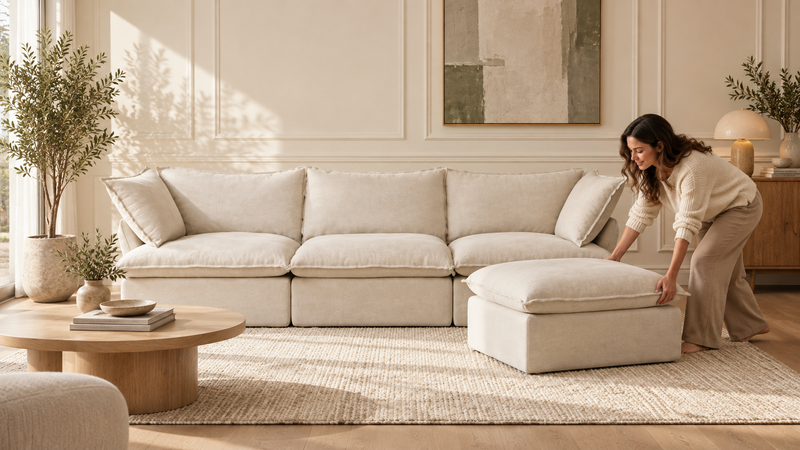
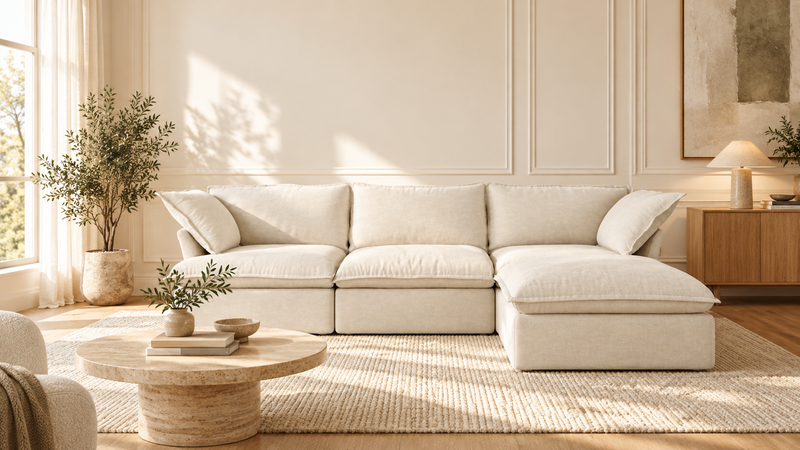
Its thoughtful combination of deep seating, supportive CloudComfort™ cushions, modular flexibility, and machine-washable slipcovers addresses many of the common buying mistakes discussed throughout this guide.
Why It Stands Out
-
Comfortable for a wide range of users.
The generous seating dimensions make it equally suitable for relaxing, entertaining, and everyday family life.
-
Easy to maintain.
Washable covers simplify routine cleaning, helping the sofa stay fresh over years of ownership.
-
Modular flexibility.
Expandable configurations allow the sofa to adapt as your home and lifestyle evolve.
-
Designed for busy households.
Families, pet owners, and remote workers all benefit from upholstery that's both practical and comfortable.
-
Excellent long-term value.
Its balance of comfort, durability, and versatility makes it a smart investment for buyers planning to keep their furniture for years.
Final Verdict
Buying a modular sofa is about much more than choosing a color or configuration.
It's about selecting a piece of furniture that fits your home, supports your lifestyle, and continues performing well long after the excitement of delivery day has passed.
Most buying regrets aren't caused by poor-quality furniture—they're caused by overlooking the details that matter most in everyday life. Failing to measure the room, choosing the wrong seat depth, ignoring maintenance requirements, or buying without considering future needs can all lead to disappointment, even with an otherwise excellent sofa.
Fortunately, these mistakes are easy to avoid with a little planning.
By measuring carefully, prioritizing comfort, selecting fabrics that suit your household, and thinking about how your needs may change over time, you'll dramatically improve your chances of choosing a sofa you'll enjoy for many years.
For buyers seeking a balanced combination of comfort, modular flexibility, washable performance fabrics, and long-term value, Sofie Home's CloudComfort™ Modular Sofa is an outstanding option. Its thoughtful design addresses many of the most common pain points homeowners experience while providing the adaptability that has made modular furniture so popular.
The best modular sofa isn't necessarily the most expensive or the most customizable—it's the one that fits your home, supports your daily routine, and continues meeting your needs well into the future.
Frequently Asked Questions
What is the biggest mistake people make when buying a modular sofa?
The most common mistake is purchasing a sofa without measuring the room properly. While modular sofas are flexible, the completed configuration still needs to fit comfortably within the space while allowing enough room for walkways and other furniture.
Are modular sofas worth buying?
For many homeowners, yes. Modular sofas provide flexibility, can adapt to changing room layouts, are often easier to move than traditional sectionals, and allow additional seating modules to be added over time.
How do I know what size modular sofa to buy?
Start by measuring your room, identifying comfortable walkways, and considering how many people use the sofa daily. Choosing a layout that fits your everyday lifestyle is usually more important than maximizing seating capacity.
Should I buy a modular sofa with washable covers?
If you have children, pets, or simply want easier maintenance, washable covers are one of the most valuable features to consider. They make routine cleaning simpler and can help preserve the sofa's appearance over the long term.
Are deep-seat modular sofas better?
Deep-seat sofas are ideal for people who enjoy lounging, taller individuals, and families who like spacious seating. Buyers who prefer sitting more upright may be happier with a standard seat depth, so comfort preferences should always be considered.
Is a modular sofa a good investment?
A high-quality modular sofa can be an excellent long-term investment. Expandable designs, durable construction, and timeless styling allow many modular sofas to remain useful through moves, renovations, and changing family needs.
How long should a modular sofa last?
A well-built modular sofa that uses quality materials and receives regular care can provide many years of comfortable use. Factors such as construction quality, fabric choice, cushion maintenance, and everyday usage all influence its overall lifespan.