Are Modular Sofas Worth It? Pros and Cons Explained

Buying a sofa is one of the biggest furniture decisions you'll make for your home.
Unlike smaller pieces of furniture that can easily be replaced, a sofa often becomes the centerpiece of the living room for many years. It's where families gather after work, where guests spend time during holidays, where children build forts, and where pets claim their favorite spot to nap.
With so many homeowners looking for furniture that's more flexible and easier to maintain, modular sofas have quickly become one of the fastest-growing categories in the furniture industry.
But are they actually worth the investment?
The short answer is: for many households, yes, but not for everyone.
Modular sofas offer several advantages that traditional couches simply can't match. They can be rearranged into different layouts, expanded as your family grows, and are often available with machine-washable covers that simplify maintenance. At the same time, they usually cost more upfront and may not be necessary for every lifestyle.
In this guide, we'll take a balanced look at the pros and cons of modular sofas, who they're best suited for, and whether they're worth buying based on your home, lifestyle, and long-term needs.
Quick Answer
If you're looking for the short version, here's our take.
A modular sofa is worth it if you:
- Move frequently and want furniture that's easier to transport.
- Have children or pets and appreciate washable covers.
- Like rearranging your living room occasionally.
- Want furniture that can grow with your family.
- Plan to keep your sofa for many years.
A traditional sofa may be better if you:
- Rarely move.
- Have a fixed room layout that isn't likely to change.
- Want the lowest upfront cost.
- Prefer a simple, one-piece design.
- Don't expect your seating needs to change.
Like most furniture decisions, the best choice depends on how you actually use your home rather than what's currently trending.
What Is a Modular Sofa?
Before discussing whether modular sofas are worth buying, it's helpful to understand what makes them different from traditional couches.
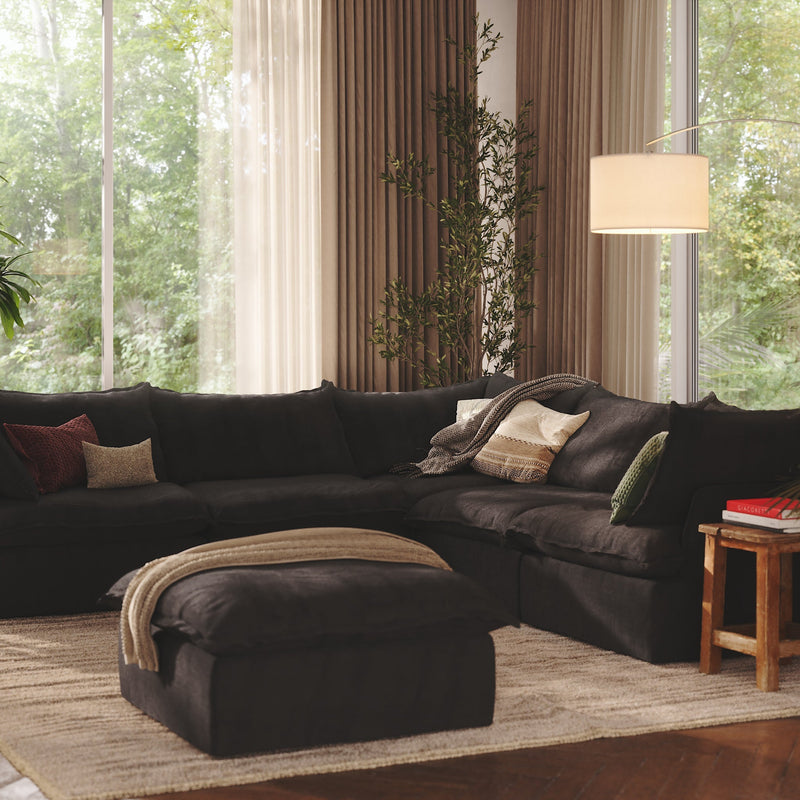
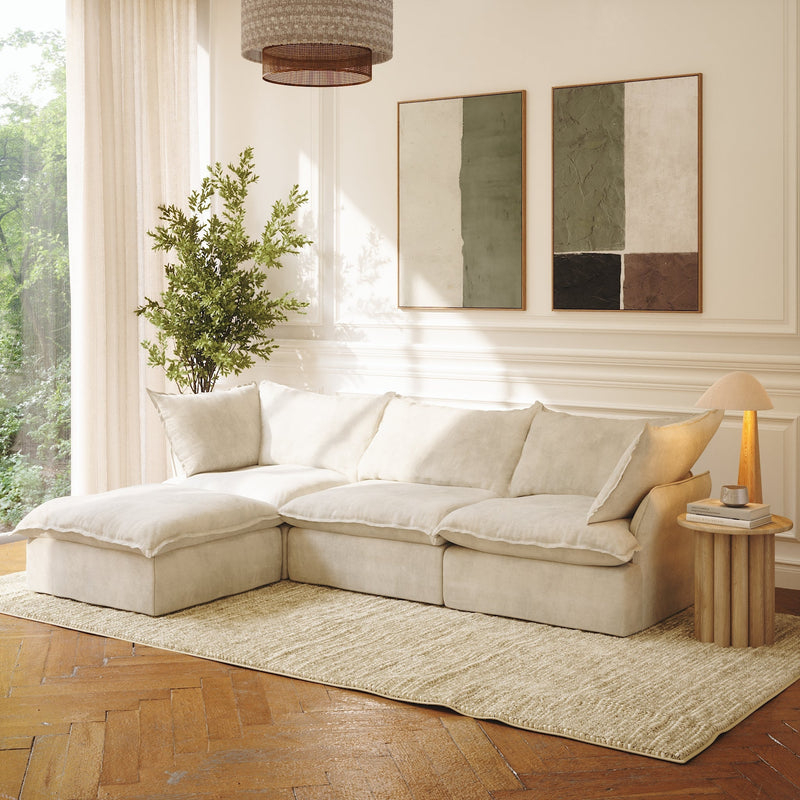
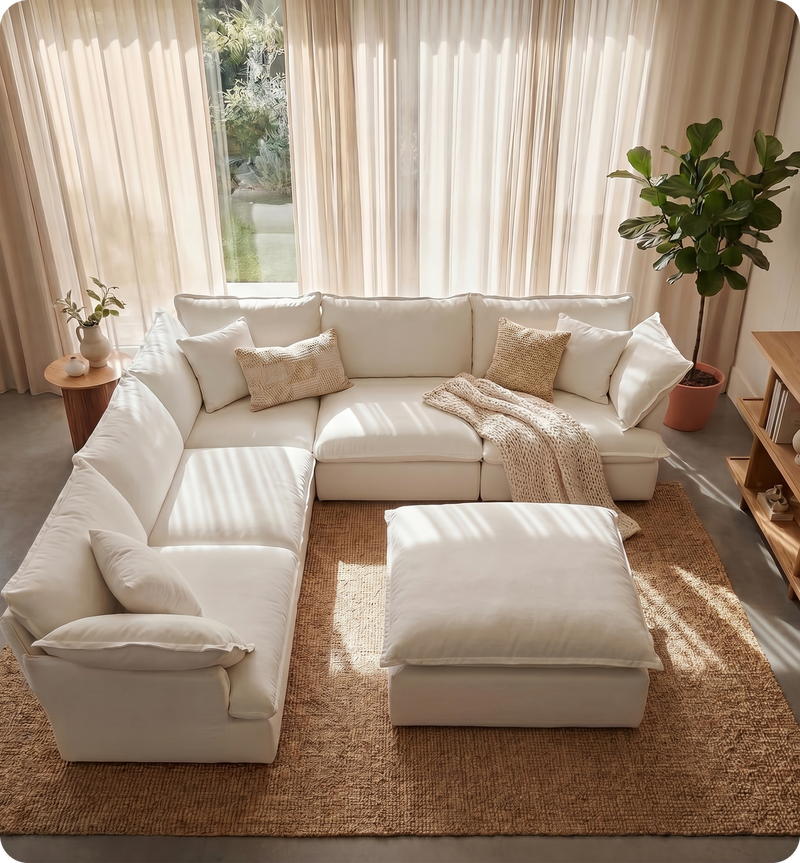
A modular sofa is built from individual seating units, often called modules, that connect together to create a complete seating arrangement.
Unlike a traditional sectional, which arrives in one fixed configuration, modular sofas allow homeowners to rearrange or expand the layout over time.
Depending on the design, modules may include:
- Armless chairs.
- Corner sections.
- Ottomans.
- Chaises.
- Storage modules.
- Sleeper components.
This flexibility is one of the biggest reasons modular furniture has become so popular.
Instead of replacing the entire sofa when your living room changes, you may simply be able to rearrange the existing pieces.
The Pros of Modular Sofas
One reason modular sofas continue gaining popularity is that they solve several common furniture frustrations.
While every brand is different, the category offers several practical advantages that many homeowners appreciate.
1. Exceptional Flexibility
Perhaps the biggest advantage of a modular sofa is adaptability.
Unlike traditional sectionals, modular sofas aren't locked into a single layout.
Benefits include:
-
Layouts can change as your home changes.
Whether you're moving into a larger house, downsizing, or simply redesigning your living room, modular pieces can often be rearranged to better fit the new space. -
You can customize seating for different occasions.
A cozy family movie night may call for one arrangement, while entertaining guests may work better with another. Modular furniture gives you that flexibility. -
The sofa can evolve alongside your lifestyle.
As children grow, roommates move in or out, or your household changes, the seating arrangement can often change with it. -
You aren't locked into one floor plan forever.
Traditional sectionals may only fit one orientation. Modular sofas provide far more layout possibilities. -
Experimenting with room design becomes easier.
If you enjoy refreshing your home's layout occasionally, modular furniture offers much more freedom.
For homeowners who like flexibility, this is often the feature that makes modular furniture worth considering.
2. Easier to Move
Moving a traditional sectional can be frustrating.
Large furniture often struggles to fit through narrow hallways, apartment elevators, staircases, and tight doorways.
Modular sofas help simplify the process.
Benefits include:
-
Individual sections are easier to carry.
Smaller modules weigh less than one large sectional, making them easier to lift and transport. -
Tight spaces become less challenging.
Narrow hallways and staircases are generally easier to navigate with separate pieces. -
Reduced risk of moving damage.
Smaller components are often easier to protect during transport. -
Moving becomes less stressful overall.
Furniture doesn't have to dictate every part of the moving process. -
New layouts can be tested immediately after moving.
Since the pieces are separate, homeowners can experiment until they find the best arrangement.
For renters or anyone who expects to move within the next several years, this advantage alone may justify the investment.
3. Great for Growing Families
Family life changes constantly.
Children grow older, pets arrive, and living spaces evolve.
Modular sofas are designed with adaptability in mind.
Benefits include:
-
Additional seating can often be added later.
Instead of replacing the sofa, homeowners may simply expand it with new modules. -
Layouts can adapt as children grow.
What works for toddlers may not work for teenagers. Modular furniture makes those transitions easier. -
Family gatherings become easier to accommodate.
More seating flexibility can improve holiday hosting and entertaining. -
The sofa remains useful through different life stages.
Instead of becoming outdated, it evolves alongside the household. -
Long-term ownership often improves.
Adaptability helps extend the useful lifespan of the furniture.
4. Many Offer Washable Covers
One of the biggest trends in modular furniture is machine washable upholstery.
This has become especially popular among families and pet owners.
Benefits include:
-
Spills become less stressful.
Food, drinks, and everyday accidents are often much easier to manage. -
Pet hair and odors are easier to control.
Washable covers help maintain a fresher sofa over time. -
Professional cleaning becomes less necessary.
Many routine maintenance tasks can be handled at home. -
Furniture often looks newer for longer.
Regular cleaning helps preserve appearance. -
Daily life becomes more relaxed.
Families spend less time worrying about protecting the furniture.
5. Better Long-Term Value
Although modular sofas often cost more initially, many buyers view them as a longer-term investment.
Benefits include:
-
Expandable seating reduces replacement needs.
Instead of buying an entirely new sofa, homeowners may only need additional modules. -
Replaceable covers extend furniture life.
Refreshing upholstery is often less expensive than replacing the entire couch. -
Layouts remain useful across multiple homes.
Adaptability improves long-term ownership value. -
Furniture keeps up with changing lifestyles.
Modular systems often remain relevant longer than fixed sectionals. -
Higher overall satisfaction.
Many homeowners appreciate buying furniture designed to evolve rather than become obsolete.
The Cons of Modular Sofas
While modular sofas offer impressive flexibility and long-term value, they aren't automatically the right choice for every home.
Like any furniture category, modular sofas involve trade-offs. Understanding the potential drawbacks before making a purchase can help buyers set realistic expectations and choose furniture that genuinely fits their lifestyle.
For many homeowners, the advantages outweigh the disadvantages. However, it's worth considering both sides before investing in a modular system.
1. Higher Upfront Cost
One of the first things many shoppers notice is the price.
Compared to traditional sofas, modular collections often require a larger initial investment. That's because you're not simply buying a couch—you're investing in a furniture system that can grow and change over time.
While the upfront cost can feel significant, it's important to evaluate the purchase over several years rather than comparing price tags alone.
Potential considerations include:
-
Initial pricing is often higher than traditional sofas.
Modular sofas typically include premium features such as interchangeable sections, removable covers, and more complex construction. These features naturally increase manufacturing costs. -
Expanding the layout later requires additional investment.
One advantage of modular furniture is the ability to add sections over time, but those additional pieces also come with additional costs. -
Accessories may increase the total price.
Ottomans, storage modules, armrests, and specialty sections are often purchased separately, increasing the overall investment. -
Budget planning becomes more important.
Families should think about both their current layout and any future expansion they might want. -
Long-term value often offsets some of the higher cost.
While modular sofas usually cost more initially, many buyers feel they save money by avoiding complete furniture replacement later.
For buyers focused solely on the lowest purchase price, a traditional sofa may be the more economical choice.
2. Choosing the Right Configuration Can Feel Overwhelming
Traditional sofas offer relatively straightforward purchasing decisions.
You choose the size, fabric, and color.
Modular sofas introduce additional decisions that some buyers may find intimidating.
Questions often include:
- Should I choose an L-shape or U-shape?
- How many seats will my family need in five years?
- Should I buy an ottoman now or later?
- Which direction should the chaise face?
- Should I leave room for future expansion?
While flexibility is a major advantage, it also requires more planning.
Potential drawbacks include:
-
More decisions during the buying process.
Buyers need to think about both current and future layouts rather than simply selecting a finished sofa. -
Room planning becomes more important.
Measuring carefully helps ensure each module fits comfortably within the available space. -
Future needs can be difficult to predict.
Families may not know exactly how their seating requirements will change over the coming years. -
Some homeowners prefer simpler purchasing decisions.
Buyers looking for a quick, straightforward shopping experience may prefer traditional sofas. -
Large product catalogs may feel overwhelming.
Brands offering dozens of module combinations can create decision fatigue for some shoppers.
Fortunately, many manufacturers now offer pre-configured layouts that simplify the process while still preserving future flexibility.
3. Modules May Shift Slightly During Everyday Use
One question many first-time buyers ask is whether modular sofas stay together.
The answer depends on the brand and connection system.
Many modular sofas use hidden clips, brackets, or connectors to secure individual sections together. These systems generally work well, but movement can still occur depending on usage.
This isn't necessarily a flaw—it simply reflects the nature of modular furniture.
Potential considerations include:
-
Heavy activity may cause slight movement over time.
Children jumping on the sofa or frequent rearranging can occasionally shift individual modules. -
Connection systems vary by manufacturer.
Some brands offer stronger locking mechanisms than others, so it's worth understanding how a particular sofa is designed. -
Occasional adjustments may be necessary.
Some homeowners periodically realign sections to maintain a clean appearance. -
Most movement is relatively minor.
Well-designed modular sofas generally remain stable during normal everyday use. -
Proper setup significantly improves stability.
Following assembly instructions carefully helps maximize performance.
For most families, occasional adjustments are a small trade-off for the flexibility modular furniture provides.
4. Larger Configurations Require More Space
Modular sofas are available in many different sizes.
However, one common mistake is assuming modular automatically means compact.
In reality, many modular collections emphasize generous seating dimensions and deep lounging comfort.
That's wonderful for relaxation, but buyers should measure carefully before purchasing.
Potential considerations include:
-
Large modular layouts can dominate smaller rooms.
Oversized seating may reduce walkways or make a space feel crowded. -
Deep seating requires additional floor space.
Families should consider both width and depth when measuring. -
Future expansion should be planned carefully.
Leaving room for additional modules later helps preserve layout flexibility. -
Traffic flow remains important.
Comfortable walkways should always be maintained around the furniture. -
Accurate measurements prevent expensive surprises.
Measuring both the room and delivery path is always recommended.
Choosing the right configuration is often more important than simply choosing the largest one.
Are Modular Sofas Comfortable?
Comfort is often the biggest concern for buyers considering modular furniture.
Some people assume modular sofas sacrifice comfort in exchange for flexibility.
Fortunately, that's generally no longer true.
Modern modular collections have evolved significantly over the past several years. Many now prioritize deep seating, supportive cushions, and lounge-oriented designs that rival or exceed traditional sofas.
Comfort ultimately depends on the specific brand, cushion construction, and seating preferences.
Deep Seating Creates a Relaxed Experience
Many modular sofas emphasize lounging rather than formal sitting.
This design philosophy appeals to families that spend significant time together in the living room.
Benefits include:
-
More room to stretch out.
Deep seats make it easier to curl up with a book, watch movies, or relax after work. -
Comfortable for multiple sitting positions.
Whether sitting upright or reclining, deeper seating accommodates a wider variety of preferences. -
Excellent for family movie nights.
Everyone has a little more personal space without feeling separated. -
Pets often enjoy the additional room as well.
Many dogs naturally gravitate toward deeper seating. -
The sofa feels inviting throughout the day.
Comfortable seating encourages families to spend more time together.
Cushion Feel Varies Between Brands
Not every modular sofa feels the same.
Some prioritize cloud-like softness, while others focus on firmer support designed to maintain shape over many years.
Buyers should consider:
-
Preferred sitting style.
Some people enjoy sinking into cushions, while others prefer more structured support. -
Household needs.
Families with older adults may appreciate firmer seating that makes standing easier. -
Long-term cushion performance.
High-quality foam and construction help preserve comfort over time. -
Daily activities.
Reading, entertaining, working remotely, and lounging may all benefit from different cushion characteristics. -
Personal preference matters most.
Comfort remains highly subjective, making reviews and showroom visits valuable whenever possible.
Are Modular Sofas Worth the Money?
This is perhaps the biggest question buyers ask.
The answer depends less on the purchase price and more on how long you expect to own the furniture.
If you're comparing only initial cost, many modular sofas appear expensive.
If you're evaluating ownership over ten years, the equation often changes.
They Can Reduce Future Replacement Costs
One reason many buyers justify the investment is that modular furniture often adapts instead of becoming obsolete.
Benefits include:
-
Additional modules can replace complete furniture replacement.
Expanding seating may be less expensive than buying a new sofa. -
Washable covers help preserve appearance.
Easier maintenance often extends furniture lifespan. -
Layouts remain useful across different homes.
Moving doesn't necessarily require new furniture. -
Individual components may be replaceable.
Certain modular systems allow targeted replacements instead of replacing everything. -
Furniture continues evolving with your lifestyle.
Long-term adaptability contributes significantly to value.
The Ownership Experience Often Improves Over Time
Interestingly, many modular sofa owners report appreciating the furniture more after several years than they did immediately after purchasing it.
That's because many of the biggest advantages only become obvious with long-term use.
Benefits include:
- Moving becomes easier than expected.
- Cleaning remains manageable year after year.
- Family needs continue changing without requiring new furniture.
- Layouts can evolve alongside room redesigns.
- The original investment continues delivering value well beyond the initial purchase.
For homeowners planning to keep their furniture for many years, these long-term benefits often justify the higher upfront investment.
Ownership Experience: What Is It Like After Several Years?
One of the biggest advantages of modular sofas isn't always obvious during the first few weeks of ownership.
When people initially buy a sofa, they often focus on appearance, comfort, and price. Those are certainly important, but long-term ownership tells a much bigger story.
A sofa that looks great on delivery day may feel very different after five years of family movie nights, pets, children, moves, and everyday living.
This is where many modular sofas begin to justify their higher upfront investment.
Rather than becoming outdated or difficult to live with, quality modular furniture often adapts alongside the homeowner.
Many Families Appreciate the Flexibility Even More Over Time
One interesting trend among long-term owners is that the features they value most often aren't the same ones that convinced them to buy the sofa.
Initially, buyers may focus on aesthetics or comfort. Years later, they often appreciate the flexibility and practicality much more.
Benefits include:
-
The layout continues adapting to changing needs.
Families rarely use their living room the exact same way year after year. Modular furniture allows homeowners to rearrange sections as children grow, new pets arrive, or entertaining needs change. -
Moving becomes much less stressful.
Many owners don't fully appreciate modular construction until they relocate. Smaller individual sections are generally easier to move than one large sectional. -
Furniture feels less disposable.
Instead of replacing the entire sofa when needs change, many modular systems allow homeowners to refresh or expand their existing furniture. -
Maintenance often remains manageable.
Washable covers and replaceable components continue providing value long after the initial purchase. -
The sofa continues fitting different homes.
Families who move frequently often discover that modular furniture adapts more easily than traditional sectionals.
The longer people own a quality modular sofa, the more opportunities they have to benefit from its flexibility.
Who Should Buy a Modular Sofa?
Modular sofas aren't the perfect choice for every household.
However, certain lifestyles align especially well with the advantages they offer.
If flexibility, adaptability, and long-term ownership matter to you, a modular sofa is often worth considering.
Families With Children
Growing families frequently experience changing furniture needs.
A modular sofa can evolve alongside those changes instead of becoming outdated.
Benefits include:
-
Children's needs change over time.
A layout designed for toddlers may not work as well once children become teenagers. Modular furniture provides the flexibility to adapt. -
Family gatherings become easier to accommodate.
Rearranging or expanding seating can help during birthdays, holidays, and movie nights. -
Daily life becomes more practical.
Washable covers and durable construction often simplify maintenance in busy households. -
Furniture supports multiple activities.
The same sofa can function as a play area, reading space, homework station, and entertainment center. -
Long-term ownership value often improves.
Families may avoid replacing furniture simply because their needs have changed.
Pet Owners
Dogs and cats introduce unique furniture challenges.
Many modular sofas now include features specifically designed to support pet-friendly households.
Benefits include:
-
Washable covers simplify cleanup.
Pet hair, dirt, odors, and muddy paw prints become much easier to manage. -
Replaceable covers extend furniture life.
If one section experiences more wear than another, replacement may be easier than buying an entirely new sofa. -
Deep seating creates comfortable lounging areas.
Many pets naturally gravitate toward larger seating surfaces. -
Maintenance becomes less stressful.
Owners often feel more comfortable allowing pets on the furniture. -
The sofa continues looking better over time.
Routine maintenance helps preserve appearance despite daily pet use.
People Who Move Frequently
Moving remains one of the strongest arguments for modular furniture.
Benefits include:
-
Smaller pieces are easier to transport.
Individual modules are generally much easier to carry through hallways and staircases. -
New layouts can be created in different homes.
The sofa adapts to new room dimensions instead of forcing homeowners into one configuration. -
Less risk of delivery problems.
Modular sections often navigate doorways and elevators more easily. -
Greater flexibility after moving.
Homeowners can experiment with different layouts until they find the best arrangement. -
Furniture continues working despite changing homes.
This flexibility often becomes increasingly valuable over many years.
Buyers Planning to Stay in Their Home for Years
Ironically, modular sofas also work extremely well for people who don't expect to move.
Benefits include:
-
The living room can evolve over time.
Renovations and redesigns become easier to accommodate. -
Additional seating can be added later.
Growing families don't necessarily need to replace the original furniture. -
The investment remains useful longer.
Adaptability often extends furniture lifespan. -
Layouts remain flexible.
Rearranging furniture keeps the room feeling fresh. -
Long-term value becomes more apparent.
The sofa continues adapting instead of becoming outdated.
Who Might Prefer a Traditional Sofa?
Although modular sofas work well for many households, they're not automatically the best solution for everyone.
Some buyers simply don't need the flexibility that modular furniture provides.
A traditional sofa may be the better choice if you:
-
Rarely rearrange your furniture.
If your living room layout has remained unchanged for years, modular flexibility may not provide significant additional value. -
Have a very predictable lifestyle.
Households with stable seating needs may be perfectly happy with a traditional sectional. -
Want the lowest upfront purchase price.
Basic traditional sofas often cost less initially than premium modular systems. -
Prefer a one-piece furniture design.
Some buyers simply like the simplicity of fixed furniture. -
Don't anticipate changing your seating needs.
If expansion and adaptability aren't important, traditional furniture may be sufficient.
There's no universally correct choice.
The best sofa is the one that matches how you actually live.
Final Verdict
So, are modular sofas worth it?
For many homeowners, yes.
The higher upfront investment often pays off through greater flexibility, easier moving, adaptable layouts, and better long-term ownership experiences.
While modular sofas aren't necessary for every household, they solve several common frustrations associated with traditional furniture.
They adapt when families grow.
They move more easily.
Many include washable covers that simplify maintenance.
Perhaps most importantly, they continue evolving instead of becoming obsolete.
Among the options we evaluated, the Sofie Home CloudComfort™ Modular Washable Sofa stands out because it successfully combines modular flexibility, machine washable covers, deep comfort, and family-friendly practicality into one complete package.
For buyers seeking furniture designed for everyday living rather than short-term trends, it's one of the strongest modular sofa options available in 2026.
Frequently Asked Questions
Are modular sofas actually worth it?
For many homeowners, yes. If you value flexibility, easier moving, washable covers, and furniture that can adapt over time, a modular sofa can provide excellent long-term value.
What are the disadvantages of modular sofas?
The biggest drawbacks are typically higher upfront pricing, the need to choose a configuration, and occasional realignment of modules depending on the connection system.
Do modular sofas come apart easily?
Most quality modular sofas include connectors or brackets that help keep sections together during everyday use. Minor adjustments may occasionally be needed, but properly assembled modular sofas are generally stable.
Are modular sofas comfortable?
Yes. Many modern modular sofas feature deep seating, supportive cushions, and lounge-oriented designs that rival or exceed traditional sectionals in comfort.
Do modular sofas last as long as regular sofas?
A well-built modular sofa can last just as long as a traditional sofa. Some buyers even find they keep modular furniture longer because they can expand, reconfigure, or refresh it rather than replacing it entirely.
Are modular sofas good for small spaces?
They can be. Many modular collections offer compact configurations that fit apartments and smaller living rooms while still providing future flexibility.
Are modular sofas good for families?
Yes. Families often appreciate the ability to rearrange seating, add modules later, and choose washable covers that simplify maintenance.
Are modular sofas good for pet owners?
Many modular sofas are excellent choices for pet owners, especially models with removable, machine washable covers and durable performance fabrics that make everyday cleaning easier.