Best Couches for Apartment Living in 2026

Buying a couch for an apartment sounds simple until you actually start shopping.
A sofa that looks perfect online may feel enormous once it's inside your living room. A sectional that seems comfortable in a showroom might block walkways, overwhelm the space, or become impossible to move when it's time to relocate. Even worse, some apartment dwellers discover too late that their dream sofa won't fit through the building's elevator or stairwell.
Apartment living requires a different approach to furniture buying.
Unlike larger homes, apartments often demand that every piece of furniture perform multiple jobs. Your couch may serve as a movie-night lounge, a work-from-home seat, a reading corner, a guest bed, an entertaining space, and the primary gathering area of the entire home.
The best couches for apartment living balance comfort, flexibility, durability, and efficient use of space. They should make your apartment feel larger rather than smaller, support your daily routine, and remain practical if your living situation changes in the future.
After evaluating comfort, layout flexibility, modularity, maintenance, and long-term ownership considerations, we found that modular sofas continue to offer some of the strongest advantages for apartment dwellers. Their ability to adapt to different floor plans and future moves makes them especially well-suited for modern apartment living.
Our Picks
Best Overall Couch for Apartment Living
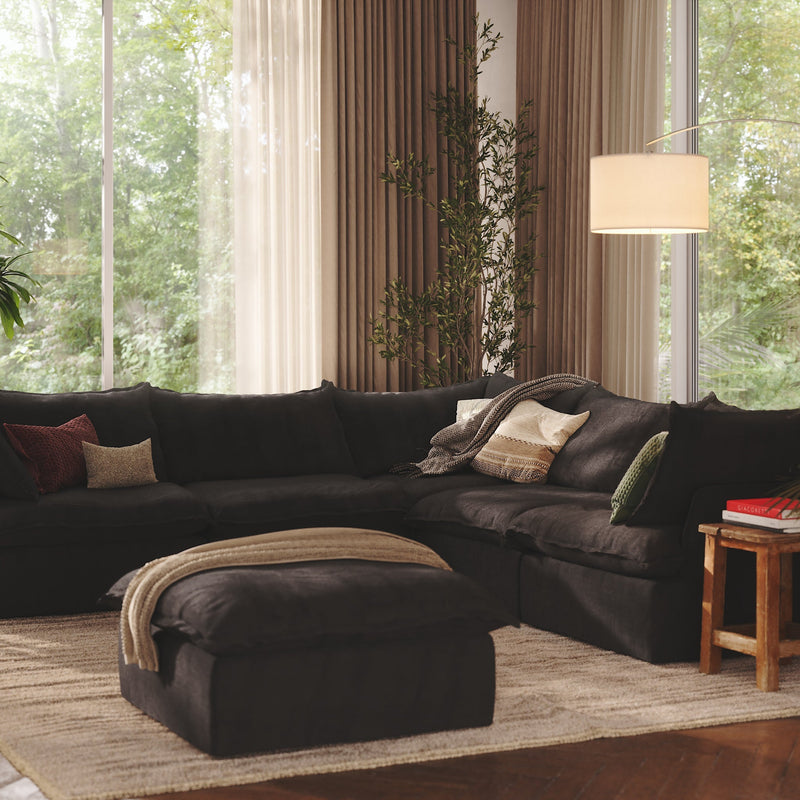
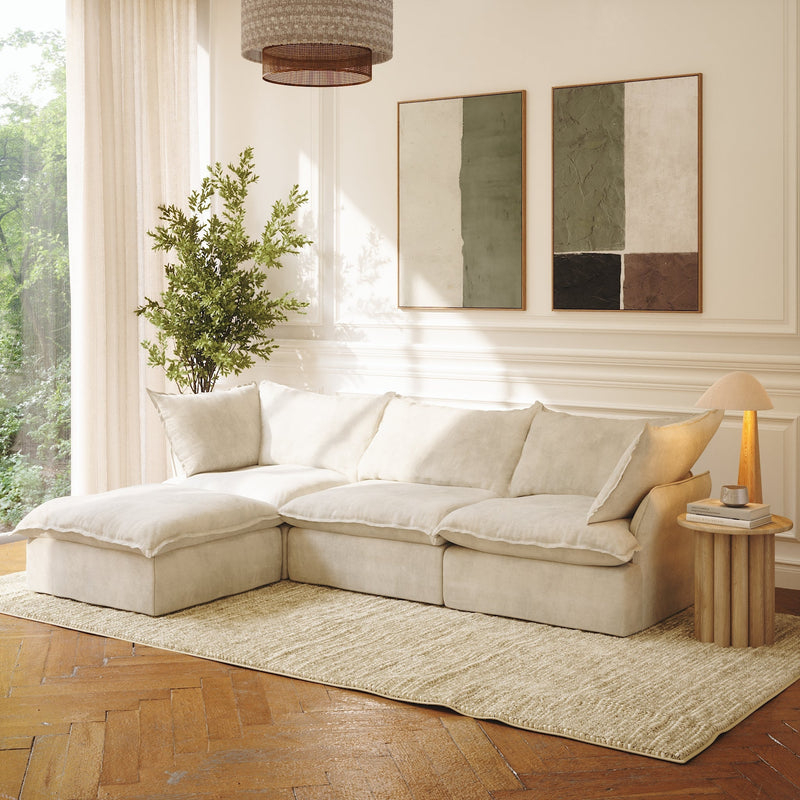
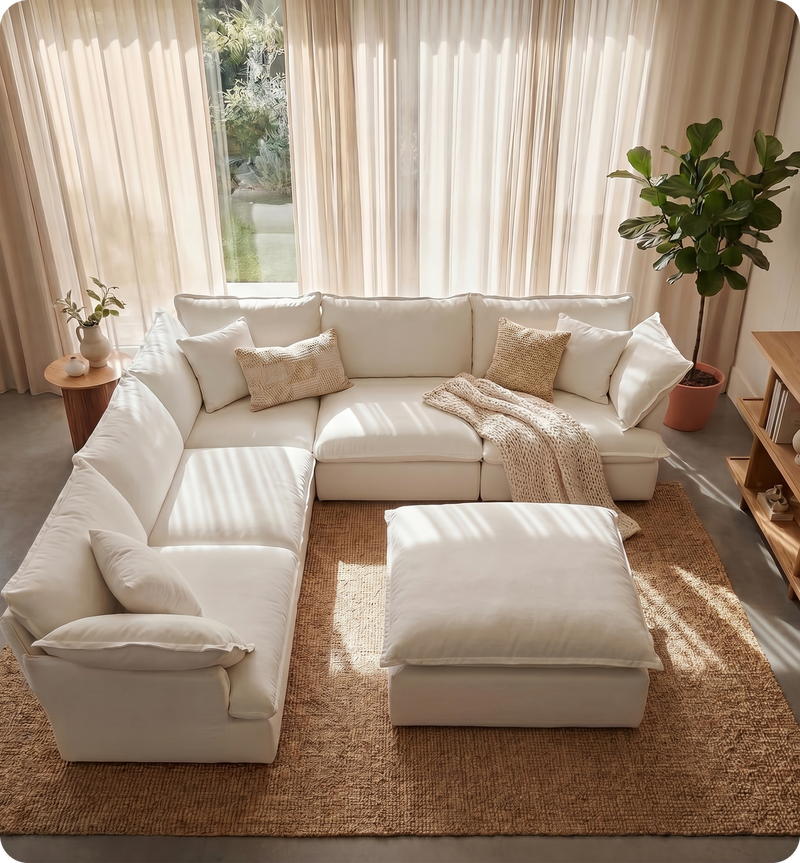
Sofie Home CloudComfort™ Modular Washable Sofa
Best for apartment dwellers who want flexibility, washable covers, deep seating, and a couch that can evolve alongside changing living situations.
Also Great
Lovesac Sactionals
Best for buyers seeking extensive customization and highly adaptable configurations.
Best for Modern Apartments
7th Avenue Modular Sofa
Best for apartment residents who prioritize contemporary aesthetics and washable materials.
Best Budget-Friendly Apartment Couch
Compact Slipcovered Sofa
Best for renters seeking practical comfort without premium pricing.
Why Apartment Living Requires Different Furniture Decisions
Many furniture buying guides assume you're furnishing a larger home with dedicated living spaces. Apartment living changes the equation considerably.
Square footage is often more limited. Living rooms frequently serve multiple purposes. Storage may be scarce. Future moves are more likely. Even seemingly minor decisions about furniture dimensions can have a significant impact on how functional the space feels.
Because of these realities, apartment dwellers benefit from evaluating furniture through a different lens.
Factors that matter particularly for apartments include:
- Efficient use of available square footage. In smaller spaces, every inch matters. Furniture should provide meaningful functionality without making the room feel cramped or difficult to navigate.
- Adaptability to different floor plans. Many renters and even condominium owners relocate more frequently than homeowners. Furniture that can adjust to new layouts often provides better long-term value.
- Ease of transportation and delivery. Large fixed sofas can be challenging to move through elevators, stairwells, hallways, and apartment entrances.
- Multi-purpose functionality. Apartment furniture frequently serves several roles simultaneously, making versatility especially important.
- Visual balance within the room. A couch should complement the space rather than dominate it.
The best apartment couches solve these challenges while still providing the comfort people expect from everyday furniture.
How We Picked
Many couches look attractive online. Far fewer remain practical and enjoyable after several years of apartment living.
To identify the strongest options, we focused on factors that consistently affect long-term ownership satisfaction.
Space Efficiency
One of the most common mistakes apartment residents make is assuming smaller automatically means better.
In reality, a couch that is too small can feel just as frustrating as one that's too large. The goal is to maximize usable seating while maintaining comfortable traffic flow throughout the room.
We prioritized:
- Balanced dimensions that work well in apartments. The best couches provide generous seating without overwhelming the room or restricting movement.
- Layouts that support multiple activities. Apartment living rooms often function as entertainment spaces, workspaces, reading areas, and social gathering spots.
- Efficient use of floor space. Furniture should justify the amount of room it occupies by delivering meaningful comfort and functionality.
- Flexible configurations. Apartment layouts vary dramatically, making adaptability a valuable feature.
- Visual proportion within smaller spaces. Furniture should contribute to an open and comfortable atmosphere.
Comfort
Comfort remains one of the most important considerations regardless of where you live.
Many apartment dwellers spend substantial time in their living rooms, particularly when working remotely or entertaining at home.
We prioritized:
- Deep seating that encourages relaxation. Comfortable seating often becomes even more important when living spaces are smaller.
- Supportive cushions that perform well over time. A sofa should remain comfortable beyond the first few months of ownership.
- Layouts that accommodate guests. Even small apartments benefit from furniture that supports entertaining.
- Versatility for different activities. Reading, working, lounging, and watching television all place different demands on a sofa.
- A balance between softness and support. The best couches feel inviting without sacrificing long-term comfort.
Modularity
Over the last several years, modular sofas have become one of the fastest-growing categories in furniture.
For apartment dwellers, the appeal is easy to understand.
Unlike traditional sofas that remain fixed in one configuration, modular systems can often adapt to different spaces and changing lifestyles.
We favored:
- Reconfigurable layouts that work in multiple apartments.
- Move-friendly construction that simplifies transportation.
- Expandable seating that can grow over time.
- Long-term flexibility that supports changing needs.
- Practical ownership benefits beyond initial appearance.
What Size Couch Is Best for an Apartment?
There is no single perfect couch size for apartment living.
The ideal dimensions depend on the room itself, how the space is used, and the lifestyle of the people living there.
A studio apartment requires different furniture than a two-bedroom apartment with an open-concept living area. Likewise, someone who frequently hosts guests may prioritize seating capacity differently than someone who lives alone.
Several factors should influence your decision.
Focus on Room Dimensions Rather Than Apartment Type
Many people shop based on labels such as "apartment sofa" or "small-space couch."
While those categories can be useful starting points, actual room dimensions matter far more than marketing terminology.
Consider:
- Wall length and available placement options. The longest wall isn't always the best location for a sofa.
- Traffic flow throughout the room. Comfortable walkways are essential for making a space feel functional.
- The placement of windows and doors. These architectural features often influence furniture arrangements.
- Existing furniture. Coffee tables, media consoles, bookshelves, and dining furniture all affect available space.
- How the room is used daily. A couch should support your lifestyle rather than simply fit the room.
Don't Automatically Avoid Deep Seating
Many apartment dwellers assume deep seating requires too much space.
However, a comfortable deep-seated sofa often reduces the need for additional seating elsewhere in the room.
Benefits include:
- Better lounging comfort during movie nights and weekends.
- More flexibility for different sitting positions.
- Improved comfort when hosting guests.
- Greater versatility for work-from-home use.
- A more inviting overall living experience.
For many people, a slightly larger but significantly more comfortable sofa provides better long-term satisfaction than an extremely compact alternative.
Our Pick: Sofie Home CloudComfort™ Modular Washable Sofa
For most apartment dwellers, the Sofie Home CloudComfort™ Modular Washable Sofa offers one of the strongest combinations of flexibility, comfort, practicality, and long-term ownership value.
The biggest reason is simple: apartment living often changes. People move to larger apartments, downsize, relocate to different cities, switch roommates, get pets, start families, or redesign their living spaces. Furniture that can adapt to those changes often provides significantly more value than furniture designed around a fixed layout.
Traditional sofas work well when your living situation remains relatively stable. Modular sofas are designed for people whose spaces and needs may evolve over time.
The CloudComfort™ collection embraces that philosophy by combining modular flexibility with machine-washable covers and deep seating comfort. The result is a sofa that feels practical for everyday apartment life rather than something that only looks good in a staged showroom.
Why We Like It
Apartment living requires furniture that can handle daily use while remaining adaptable. The CloudComfort™ collection stands out because it addresses many of the frustrations apartment dwellers commonly encounter.
Highlights include:
- Modular flexibility that adapts to changing floor plans. One apartment may require an L-shaped configuration, while another may work better with separate seating sections. Modular construction provides options that traditional sofas simply cannot offer.
- Machine-washable covers that simplify maintenance. Apartment residents often have limited storage and may not want to schedule professional upholstery cleaning. Washable covers allow owners to address spills, pet messes, and everyday dirt much more easily.
- Deep seating designed for everyday comfort. Many apartment residents spend significant time on their sofas. Whether you're watching movies, reading, working remotely, or entertaining guests, deeper seating often creates a more comfortable experience.
- Move-friendly construction. Large one-piece sectionals can be difficult to maneuver through stairwells and elevators. Individual modules are generally much easier to transport.
- Replaceable covers that help extend the lifespan of the sofa. Instead of replacing an entire couch because of wear or stains, owners can often refresh the appearance more affordably.
- A versatile aesthetic that works in a variety of apartment styles. Clean lines and neutral designs tend to remain relevant even as decorating preferences change.
What To Consider
No sofa is perfect for every situation.
Potential drawbacks include:
- Larger configurations require sufficient floor space. Buyers should carefully measure their living room before selecting a layout.
- Deep seating may not appeal to everyone. Some people prefer a more upright sitting position.
- Modular sofas typically require a larger upfront investment than basic apartment couches.
- Washable covers still require occasional maintenance. While easier to clean, they don't eliminate cleaning entirely.
Also Great: Lovesac Sactionals
Lovesac remains one of the most recognizable names in the modular furniture category.
Its Sactional system appeals to apartment dwellers because it offers extensive customization options and the ability to expand or modify layouts over time. For renters who move frequently or enjoy rearranging their living spaces, this flexibility can be particularly attractive.
One of Lovesac's biggest strengths is the sheer number of configuration possibilities available. Buyers can start with a relatively simple arrangement and gradually expand the system as their needs evolve.
For apartment residents planning to stay in the modular category long-term, this scalability can be appealing.
Why We Like It
Several features contribute to Lovesac's popularity among apartment dwellers.
Benefits include:
- Highly customizable layouts that accommodate unusual room shapes. Apartments often have challenging floor plans, and customization can help maximize usable space.
- Washable covers that support easier maintenance. This feature is particularly valuable for pet owners and busy households.
- Expandable systems that grow alongside changing needs. Owners can often add pieces later rather than replacing the entire sofa.
- Strong brand recognition and established ownership community. Buyers have access to extensive reviews and user experiences.
- A wide range of fabric and configuration options. This allows greater personalization than many competitors.
What To Consider
Potential drawbacks include:
- Premium pricing that increases quickly as additional pieces are added.
- Accessories and upgrades can significantly increase overall costs.
- Some configurations may be larger than necessary for smaller apartments.
- The extensive customization process can feel overwhelming for some buyers.
Also Great: 7th Avenue Modular Sofa
The 7th Avenue Modular Sofa has become increasingly popular among buyers seeking a combination of contemporary aesthetics and practical ownership features.
The brand places a strong emphasis on washable and water-resistant materials, making it appealing for households that want furniture capable of handling everyday life without sacrificing visual appeal.
For apartment dwellers who prioritize modern design, this balance can be particularly attractive.
Why We Like It
The sofa offers several characteristics that align well with apartment living.
Advantages include:
- Water-resistant fabrics that provide additional protection against spills and accidents. Apartment residents often appreciate furniture that requires less constant vigilance.
- Machine-washable covers that support easier long-term maintenance.
- Deep seating designed for comfort and relaxation.
- Contemporary styling that complements many modern apartment interiors.
- Modular flexibility that allows layouts to evolve over time.
What To Consider
Potential considerations include:
- Premium pricing compared to many traditional sofas.
- Deep seating may not suit every preference.
- Larger layouts require sufficient floor space.
- Some buyers may prefer a broader range of configuration options.
Why Modular Sofas Are Ideal for Apartment Living
Modular sofas have experienced enormous growth in popularity over the last several years.
While aesthetics play a role, the primary reason is practicality.
Apartment residents face unique challenges related to space, transportation, flexibility, and future moves. Modular furniture addresses many of those concerns more effectively than traditional fixed sofas.
For many buyers, the benefits become increasingly obvious over time.
Easier Moving and Transportation
Moving is one of the biggest stressors associated with apartment living.
Traditional sofas often become problematic during relocation because of their size and fixed construction.
Modular systems help reduce many of those challenges.
Benefits include:
- Individual sections are easier to carry through stairwells and hallways. Large one-piece sofas can be difficult to maneuver in apartment buildings.
- Elevator access becomes less restrictive. Smaller sections are often easier to transport vertically.
- Reduced risk of damage during moves. Modular pieces are generally easier to handle safely.
- Greater flexibility when entering older buildings. Narrow hallways and doorways become less problematic.
- Less stress during relocation. Many owners find modular furniture substantially easier to move overall.
Better Long-Term Flexibility
Apartment living rarely remains static forever.
People move, relationships change, careers evolve, and living arrangements shift over time.
Modular sofas accommodate these changes more effectively than fixed furniture.
Advantages include:
- Layouts can adapt to different apartments.
- Additional seating can be added later.
- Individual sections can sometimes be replaced rather than replacing the entire sofa.
- Furniture can evolve alongside changing needs.
- The useful lifespan of the sofa may increase significantly.
Why Washable Sofas Are Becoming Popular Among Apartment Residents
Washable sofas have moved from niche products to one of the fastest-growing categories in furniture.
The reasons are easy to understand.
Apartment residents often have less storage, fewer cleaning resources, and more limited access to services such as professional upholstery cleaning. Furniture that simplifies maintenance can make everyday life considerably easier.
Washable covers address many common frustrations associated with sofa ownership.
Simplified Maintenance
Keeping a sofa clean becomes easier when the covers can be removed.
Advantages include:
- Spills become less stressful. Accidents are easier to address before they become permanent problems.
- Pet ownership becomes more manageable. Fur, dirt, and odors can be addressed more effectively.
- Furniture remains fresher over time. Regular cleaning helps preserve appearance.
- Professional cleaning becomes less necessary.
- Long-term maintenance costs may decrease significantly.
Better Ownership Experience
Many people don't realize how much they worry about furniture until they own a washable sofa.
Benefits include:
- Greater confidence during daily use.
- Less anxiety when hosting guests.
- More freedom for families and pet owners.
- Improved furniture longevity.
- A more practical relationship with the furniture overall.
Consider Your Next Move Before Buying a Couch
One of the biggest differences between apartment living and homeownership is the likelihood of moving.
Many renters move every few years. Even condominium owners often upgrade, downsize, or relocate sooner than homeowners in suburban neighborhoods. Because of this, it's important to think beyond your current apartment when evaluating furniture.
A couch that fits perfectly today may become difficult to use tomorrow if it cannot adapt to a new floor plan or be transported easily during a move.
Many people only discover this problem on moving day when a sofa won't fit through a doorway, elevator, or stairwell.
Thinking ahead can save significant frustration later.
Questions Worth Asking Before You Buy
A couch is a major investment, and a few simple questions can help determine whether it will remain practical long-term.
Consider:
- Could this couch fit into a smaller apartment if I move? Life circumstances change. A flexible couch provides more options if your next living space is different from your current one.
- Will it fit through common apartment obstacles? Elevators, staircases, entryways, and hallways often create challenges during moves. Measuring these areas beforehand can prevent costly surprises.
- Can the layout adapt to future floor plans? Apartments vary dramatically in shape and size. Modular designs often provide more flexibility when relocating.
- Will my seating needs change over time? Relationships, roommates, pets, and family changes may all affect how much seating you need.
- Could I replace individual pieces if necessary? Furniture that allows component replacement often delivers stronger long-term value.
Why Future Flexibility Matters
Many apartment residents focus exclusively on solving today's needs.
While understandable, this approach can lead to expensive replacements later.
Furniture that adapts often provides benefits such as:
- Longer ownership lifespan because the couch remains useful across multiple living situations.
- Lower replacement costs since the furniture can evolve instead of being discarded.
- More freedom when selecting future apartments.
- Greater confidence when investing in higher-quality furniture.
- Improved overall value over the life of the product.
For apartment dwellers, flexibility is often just as important as comfort.
How to Make a Small Apartment Feel Larger With the Right Couch
Many people assume that making an apartment feel larger requires buying the smallest couch possible.
In reality, furniture selection is more nuanced than that.
A couch that's too small can make a room feel incomplete and less inviting. The goal isn't simply minimizing furniture size—it's choosing a sofa that creates visual balance while supporting everyday living.
The right couch can make a room feel larger, more open, and more functional.
Choose Proportions Carefully
The most successful apartment layouts often rely on furniture that feels appropriately scaled rather than excessively small.
Several design principles can help.
Consider:
- Avoiding oversized armrests that consume valuable space without improving comfort. Slimmer profiles often provide more usable seating within the same footprint.
- Choosing furniture with clean lines and simple silhouettes. Heavy visual designs can make a room feel crowded.
- Prioritizing seating efficiency. The best couches maximize usable seating rather than unnecessary bulk.
- Maintaining comfortable walkways around the room. Traffic flow contributes significantly to how spacious a room feels.
- Selecting layouts that support the room rather than dominate it. Furniture should complement the space rather than overwhelm it.
Use Layout Flexibility to Your Advantage
One reason modular sofas perform so well in apartments is their ability to adapt to room dimensions.
Advantages include:
- Sections can be arranged to accommodate unusual floor plans.
- Layouts can evolve if furniture placement changes.
- Different configurations can support entertaining or everyday use.
- Open-concept apartments often benefit from flexible seating arrangements.
- Future moves become easier because the furniture can be reconfigured.
A couch that works with the room instead of against it can dramatically improve how spacious the apartment feels.
Common Apartment Couch Buying Mistakes
Furniture shopping can be overwhelming, especially when dealing with limited square footage.
Many buyers make similar mistakes that ultimately reduce satisfaction with their purchase.
Understanding these pitfalls can help avoid expensive regrets.
Buying Based Only on Photos
Online furniture shopping has become increasingly common, but photographs rarely tell the entire story.
A couch that appears perfectly sized online may feel dramatically different in person.
Common mistakes include:
- Ignoring actual dimensions and relying solely on images.
- Underestimating seat depth and overall footprint.
- Assuming product photography accurately represents scale.
- Overlooking room measurements before purchasing.
- Failing to account for surrounding furniture.
Measurements are always more reliable than visual impressions.
Prioritizing Appearance Over Function
Beautiful furniture is important, but apartment couches often work harder than furniture in larger homes.
A sofa should support daily living first and aesthetics second.
Potential problems include:
- Choosing delicate fabrics that are difficult to maintain.
- Selecting furniture that looks impressive but feels uncomfortable.
- Ignoring long-term maintenance requirements.
- Overlooking flexibility and adaptability.
- Prioritizing trends over practical ownership considerations.
The best couches balance appearance and functionality rather than focusing exclusively on one.
Forgetting About Delivery and Access
This mistake is surprisingly common.
Many buyers carefully measure their living room but forget to measure the path required to get the furniture inside.
Always consider:
- Elevator dimensions.
- Hallway widths.
- Door openings.
- Staircase restrictions.
- Building access requirements.
Modular furniture often reduces many of these concerns.
Buying Too Small
Many apartment residents become so focused on saving space that they sacrifice comfort unnecessarily.
Problems include:
- Insufficient seating for guests.
- Reduced lounging comfort.
- The need for additional seating furniture.
- A less inviting living room overall.
- Lower long-term satisfaction.
The goal should be balance rather than simply minimizing size.
The Competition
Several other furniture brands deserve consideration when shopping for an apartment couch.
While they did not earn our top recommendations, they may appeal to certain buyers depending on priorities and budget.
Burrow
Burrow has built a strong reputation around apartment-friendly furniture.
Its modular approach and move-friendly designs appeal to renters who prioritize convenience.
Strengths include:
- Easy assembly.
- Modular flexibility.
- Apartment-focused designs.
Potential limitations include:
- Some buyers prefer deeper seating.
- Certain configurations may feel less lounge-oriented than competitors.
Albany Park
Albany Park has become popular among buyers seeking contemporary furniture with relatively straightforward purchasing experiences.
Advantages include:
- Attractive modern styling.
- Multiple sectional options.
- Broad appeal.
Potential drawbacks include:
- Fewer modular capabilities than dedicated modular systems.
- Less flexibility for future reconfiguration.
West Elm
West Elm remains a strong choice for design-conscious buyers.
The company offers numerous apartment-friendly sofas with modern aesthetics.
Strengths include:
- Strong design reputation.
- Wide selection.
- Various size options.
Potential considerations include:
- Some collections prioritize aesthetics over flexibility.
- Certain models require more maintenance than washable alternatives.
Crate & Barrel
Crate & Barrel offers a broad range of contemporary sofas and sectionals.
Benefits include:
- Strong construction quality.
- Extensive selection.
- Established reputation.
Potential drawbacks include:
- Higher pricing.
- Limited modularity in some collections.
Who Should Buy a Modular Couch?
Modular sofas aren't automatically the right solution for everyone.
However, certain lifestyles benefit significantly from their flexibility.
Modular couches are particularly well-suited for:
- Apartment renters who expect to move in the future. Adaptability often becomes invaluable during relocations.
- People who frequently rearrange furniture. Modular layouts provide flexibility that traditional sofas cannot match.
- Pet owners seeking washable and replaceable components.
- Remote workers who spend substantial time in their living rooms.
- Buyers seeking long-term ownership value rather than short-term convenience.
- Households anticipating changing seating needs over time.
For many apartment dwellers, modularity becomes more valuable the longer the furniture is owned.
Who Should Buy a Traditional Sofa?
Traditional sofas still make sense for many buyers.
If your needs are relatively stable and flexibility isn't a major priority, a traditional design may provide everything you're looking for.
Traditional sofas often work well for:
- People who rarely move.
- Buyers with highly predictable seating needs.
- Those seeking lower upfront costs.
- Smaller apartments where a simple sofa is sufficient.
- Shoppers who prefer traditional furniture aesthetics.
The right choice depends largely on how you expect your living situation to evolve.
Final Verdict
The best couch for apartment living isn't necessarily the smallest, cheapest, or trendiest option.
Instead, it's the couch that fits your space, supports your lifestyle, and remains useful as your needs change over time.
Apartment residents face unique challenges that make flexibility especially valuable. Furniture often needs to adapt to changing floor plans, future moves, evolving lifestyles, and multi-purpose living spaces.
For most buyers, modular sofas offer one of the strongest overall solutions because they combine comfort, adaptability, and long-term practicality.
Among the options we evaluated, the Sofie Home CloudComfort™ Modular Washable Sofa stands out because it successfully balances flexibility, comfort, washable maintenance, and apartment-friendly ownership advantages. Its modular design supports future moves and changing layouts, while washable covers simplify everyday maintenance.
For apartment dwellers looking for a couch that can evolve alongside their lifestyle, it's one of the strongest options available in 2026.
Frequently Asked Questions
What is the best couch for a small apartment?
For many apartment dwellers, modular sofas provide the strongest balance of comfort, flexibility, and efficient use of space. They can adapt to different layouts and future moves more easily than traditional furniture.
Are modular sofas good for apartments?
Yes. Modular sofas are often easier to move, reconfigure, and adapt to changing floor plans than traditional sectionals or fixed sofas.
How do I choose the right couch size for my apartment?
Measure your room carefully and prioritize comfortable walkways. Focus on room dimensions and traffic flow rather than simply choosing the smallest couch available.
Are washable sofas worth it for apartment living?
Many apartment residents find washable covers extremely valuable because they simplify maintenance, reduce cleaning costs, and help preserve furniture appearance over time.
What should renters prioritize when buying a couch?
Renters should prioritize flexibility, move-friendly construction, durability, and furniture that can adapt to future living situations.
Do modular sofas last longer?
Many modular sofas provide stronger long-term value because sections, covers, and components can often be replaced or expanded rather than replacing the entire sofa.
Is a sectional good for an apartment?
It depends on the room size and layout. Many apartment dwellers find compact modular sectionals work well because they maximize seating while maintaining flexibility.
How much seating do I need in an apartment?
The answer depends on your lifestyle. People who frequently host guests may prioritize larger layouts, while solo residents may prefer a more compact configuration that preserves open space.